
Building a college football powerhouse takes more than landing a few highly rated recruits.
In Draft Day Sports: College Football 27, the strongest programs are built by making hundreds of connected decisions over time. Recruiting matters. So do roster balance, player development, coaching, scheme, cohesion and knowing when to adjust your approach.
The challenge is not simply assembling the most talented team possible. It is building a program where the pieces fit together and where today’s decisions create opportunities several seasons from now.
Here are some of the biggest things to think about when building your dynasty.
Start With a Program Identity
Before worrying about individual recruits or depth-chart battles, decide what kind of program you are trying to build.
Do you want to overwhelm opponents with an explosive offense? Build around a dominant defense? Develop players over several seasons? Recruit aggressively and reload every year?
There is no single correct answer, but having a clear direction makes the rest of your decisions easier.
Your offensive and defensive philosophies should influence the players you recruit, the coaches you hire and the way you manage your roster. A highly rated player is valuable, but a player who fits exactly what you are trying to do can be even more important.
The best dynasties usually develop an identity rather than simply collecting talent.
Recruit for Fit, Not Just Stars
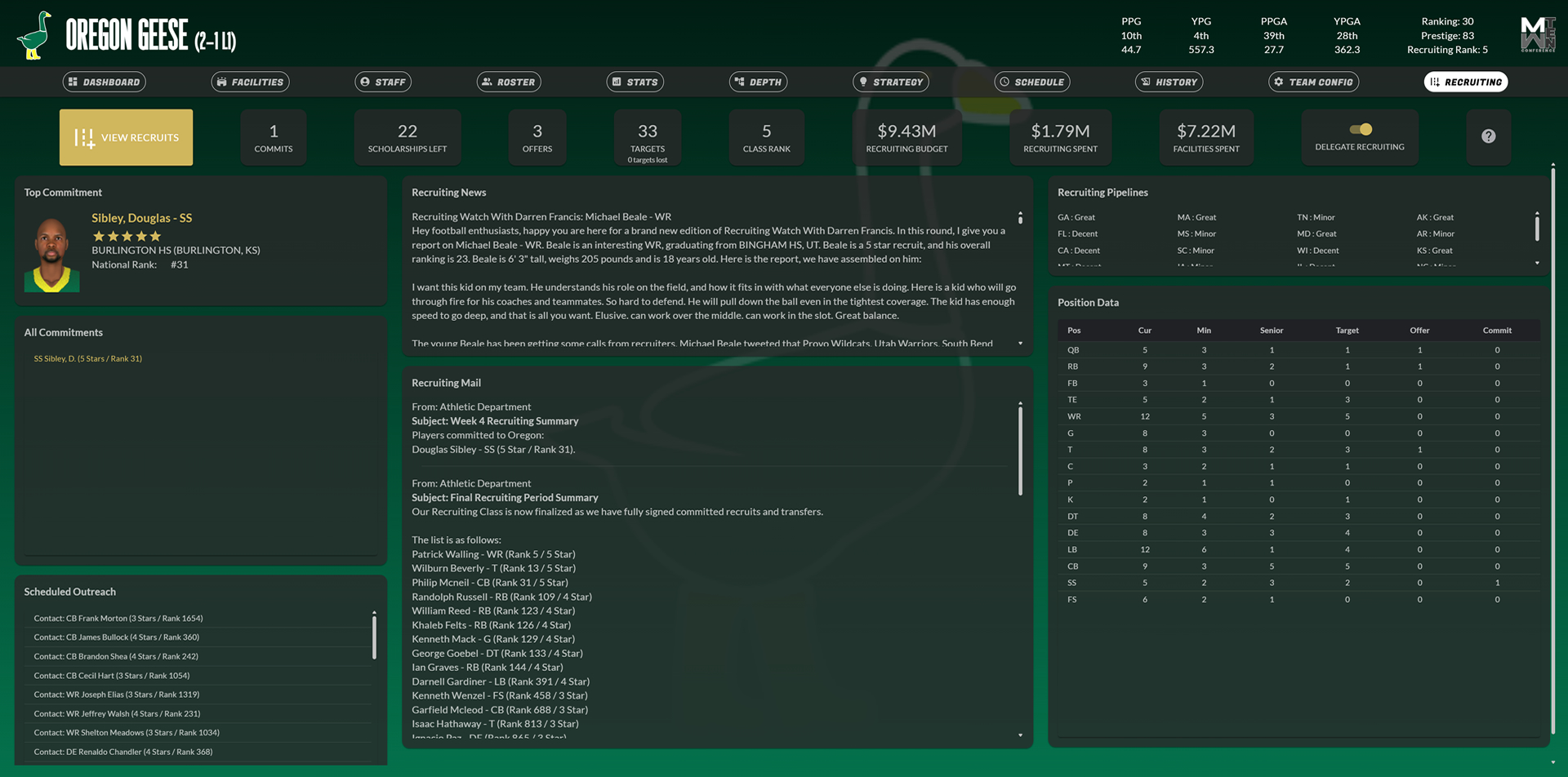
Recruiting is one of the most important parts of college football, but the biggest name on the board is not always the player your program needs most.
Start by looking at the roster you already have.
Where will you lose starters next season? Which position groups lack depth? Are you developing replacements at quarterback, offensive line or another difficult-to-fill position? Are there players who fit your system particularly well?
Recruiting becomes much more effective when you think several seasons ahead.
A recruiting class filled with highly rated players looks great on signing day, but if those players all compete for the same few spots while other positions are neglected, the roster can become unbalanced quickly.
The goal is not simply to win recruiting rankings.
The goal is to build the best football team.
Build the Entire Roster
Championship teams need more than stars.
Depth becomes important over the course of a season, and roster construction becomes even more important over multiple seasons as players develop, graduate and move through the program.
That means thinking about more than your current starters.
Who is developing behind them?
Where are you thin?
Which position groups could become problems a year from now?
A great roster often has a combination of immediate contributors, developmental players and future replacements already being prepared before they are needed.
This is one of the differences between building a good team and building a sustainable dynasty.
Match Your Scheme to Your Players
One of the easiest mistakes to make in a football management game is forcing players into a system simply because that system worked before.
Your personnel changes.
Your strategy should be able to change with it.
If your roster is built around a strong running game, your offensive approach should take advantage of that strength. If your quarterback room changes dramatically, you may need to adjust how aggressively you throw the football. Defensively, the strengths of your front seven and secondary should influence how you approach opponents.
CF27 gives you control over your playbooks, game planning and even custom plays, which means your strategy does not have to remain static.
Sometimes the best coaching decision is not finding better players for your favorite system.
It is changing the system to better fit the players you already have.
Value Continuity and Cohesion
Talent is important, but continuity can matter too.
Players who spend time together and develop within the same system can become a more effective unit than a roster that is constantly being rebuilt.
That creates an interesting long-term decision.
Do you chase immediate upgrades whenever possible, or do you allow a group to develop together?
There will be times when adding new talent is clearly the right move. There will also be situations where constantly changing personnel can disrupt something that was beginning to work.
Building a dynasty means understanding when change is necessary and when patience can produce better results.
Think Several Seasons Ahead
Every successful dynasty eventually faces turnover.
Star players leave. Recruiting classes move through the program. Position groups that looked strong can suddenly become thin.
The best time to solve those problems is before they happen.
Look beyond the current season when evaluating your roster.
If your starting quarterback will be gone soon, who is being developed behind him?
If your offensive line is filled with upperclassmen, are younger players ready to take over?
If a position group has several players leaving at once, recruiting that position becomes more important even if it is not an immediate weakness.
The strongest programs are constantly preparing for the next version of themselves.
Adjust When the Game Changes
College football seasons rarely unfold exactly as planned.
Players develop differently than expected. Injuries happen. Recruits surprise you. Opponents expose weaknesses.
Good managers recognize when the original plan needs to change.
That might mean adjusting the depth chart, changing your game plan, modifying your playbook or altering recruiting priorities.
Building a dynasty is not about finding one perfect formula and repeating it forever.
It is about making good decisions as circumstances change.
There Is No One Correct Way to Win
That is ultimately what makes building a dynasty interesting.
One player might create an offensive powerhouse built around elite recruiting.
Another might build a defense-first program that develops overlooked prospects.
Someone else might take a struggling school and slowly transform it through roster development, coaching and patient recruiting.
Each approach creates a different story.
And over the course of multiple seasons, those decisions begin to define the program you have built.
That is the heart of Draft Day Sports: College Football 27.
You are not simply controlling a team for one season.
You are building a program.
Start Building Your Dynasty Today
Ready to build your own college football dynasty? Explore Draft Day Sports: College Football 27 or try the free 7-day demo and start building your program today.